What We Do
How Meta Humans creates safe,
relationship-based learning environments
Learning at Meta Humans Is Not Pre-Packaged
Meta Humans doesn’t personalize learning by offering a menu of programs. Personalization happens through attention.
Adults at Meta Humans start by getting to know each learner: how they think, how they interact, what excites them, and what feels hard.
From there, structured experiences are introduced and adapted in real time based on how kids engage, individually and socially.
This means that learning may include projects, play, conversation, collaboration, or quiet focus, but none of these exist as fixed offerings. They emerge as part of a guided process shaped by trust, relationships, and the group.
There is structure & intention, but there is no one-size-fits-all path.
There’s structure here, but learning is guided by who your child is, not by a fixed curriculum.
There’s No One Way to Be a Meta Human
At Meta Humans, there is no “ideal” learner type.
Kids show up with different strengths, energies, preferences, and ways of engaging — and those differences are not something to fix.
-
Curious ↔ Deep Focused
Some learners love trying many things. Others go deep into one.
-

Highly Social ↔ Internally Driven
Some kids think out loud with others. Some think best on their own.
-
Structured ↔ Free-Flowing
Some learners thrive on routine. Others need flexibility to engage.
-

Broad Interests ↔ Specialized Interests
Some explore widely. Others develop deep, focused interests.
Meta Humans isn’t about turning kids into generalists or specialists.
It’s about helping them understand how they learn, how they relate to others, and how their strengths show up in the world.
By spending time with different kinds of people (and being guided through those interactions) kids learn empathy, self-awareness, collaboration, and influence.
These are the skills that matter most in an uncertain future.
The goal isn’t to become a certain kind of learner, it’s to learn who you are and how to work with others.
Structure With Flexibility
Meta Humans isn’t a fixed schedule or a set of programs to choose from.
Families choose a level of participation, how often their child attends, and from there, adults guide how time is spent based on the learner, the group, and what’s unfolding in the space.
Some days may involve projects or workshops.
Some days may look quieter or more self-directed.
Some days are highly social. Others are more focused.
What stays consistent is not the activity, it’s the adult presence, the social guidance, and the intention behind how time is used.
Learning isn’t designed in advance.
It’s shaped through attention, relationships, and experience.
Flexibility exists here, but learning is always guided, not left to chance.
How Learning Evolves Over Time
Every child’s path at Meta Humans is different.
The stages below describe common patterns we see as trust and familiarity grow, not a fixed sequence or guaranteed outcomes.
Early Visits: Getting Oriented
Most kids start by observing, testing the space, and figuring out how things work.
Educators focus on comfort level, social cues, and what naturally sparks interest—so the environment feels safe and predictable.
Weeks 2–4: Building Trust
As kids return, they begin to relax, engage more consistently, and take small social and learning risks.
Educators start pairing learners with people, tools, and activities that fit—without forcing participation.
Month 2+: Following Interests
Once trust is present, curiosity shows up more reliably—kids start choosing challenges, returning to ideas, and staying with projects longer.
Adults guide focus, help remove friction, and support learners in turning interests into meaningful work.
Ongoing: Guided Experiences
Across the day, kids move through different kinds of experiences—collaborative, hands-on, playful, and focused.
What stays consistent is adult presence: structure, social guidance, and real-time adjustment based on the learner and the group.
Belonging: Finding Their People
Over time, many learners form real friendships and become part of a community.
Adults actively support social dynamics so relationships don’t burn out—kids learn how to connect, repair, and collaborate.
Agency: Learning How They Learn
As learners gain confidence, they start making better choices for themselves—when to push, when to rest, and how to stay engaged.
This is where many parents notice the real shift: more self-awareness, more resilience, and more ownership.
Contribution: Taking Responsibility
Some older learners begin contributing to the space—helping peers, supporting projects, and practicing leadership in real ways.
This isn’t a badge or a track. It’s something that emerges when a learner is ready and wants to step forward.
Confidence: Ready for the World
Preparedness at Meta Humans looks like confidence, connection, and knowing how to learn—not mastering a predetermined list of skills.
Kids leave with stronger self-trust and better tools for navigating people, challenges, and uncertainty.
Community: Families Are Part of It
Meta Humans is built with families, not just for them. Community moments help kids and parents feel connected to something real.
Events and gatherings are optional—but they often deepen trust and belonging for everyone.
Progress & Recognition
We use light gamification to make progress visible and to celebrate effort, not to control behavior or replace intrinsic motivation.
Learners can track what they’ve explored, what they’re returning to, and what’s developing over time. Educators use this as a shared language for reflection (“what worked, what didn’t, what’s next”), and for recognition when a learner is ready for more responsibility.
It’s optional, individualized, and never used to compare kids. The goal isn’t points, it’s self-awareness, consistency, and ownership.
For teens: it isn’t about points or prizes.
It’s about building real skills, real confidence, and a track record of things you’ve actually done, so you have more freedom, more responsibility, and more say in what you work on.
Is Meta Humans a Good Fit?
Meta Humans works best for families who are looking for something different from standardized education or traditional enrichment.
It tends to be a strong fit for learners who:
don’t thrive in rigid or one-size-fits-all systems
need time and safety before fully engaging
benefit from guided social environments
are curious, asynchronous, or neurodivergent
It may not be the right fit if you’re looking for:
a fixed curriculum with guaranteed outcomes
short-term drop-in activities
externally enforced motivation
rapid, visible results in the first few weeks
Meta Humans is built for depth over speed.
FAQs
What actually happens during a day at Meta Humans?
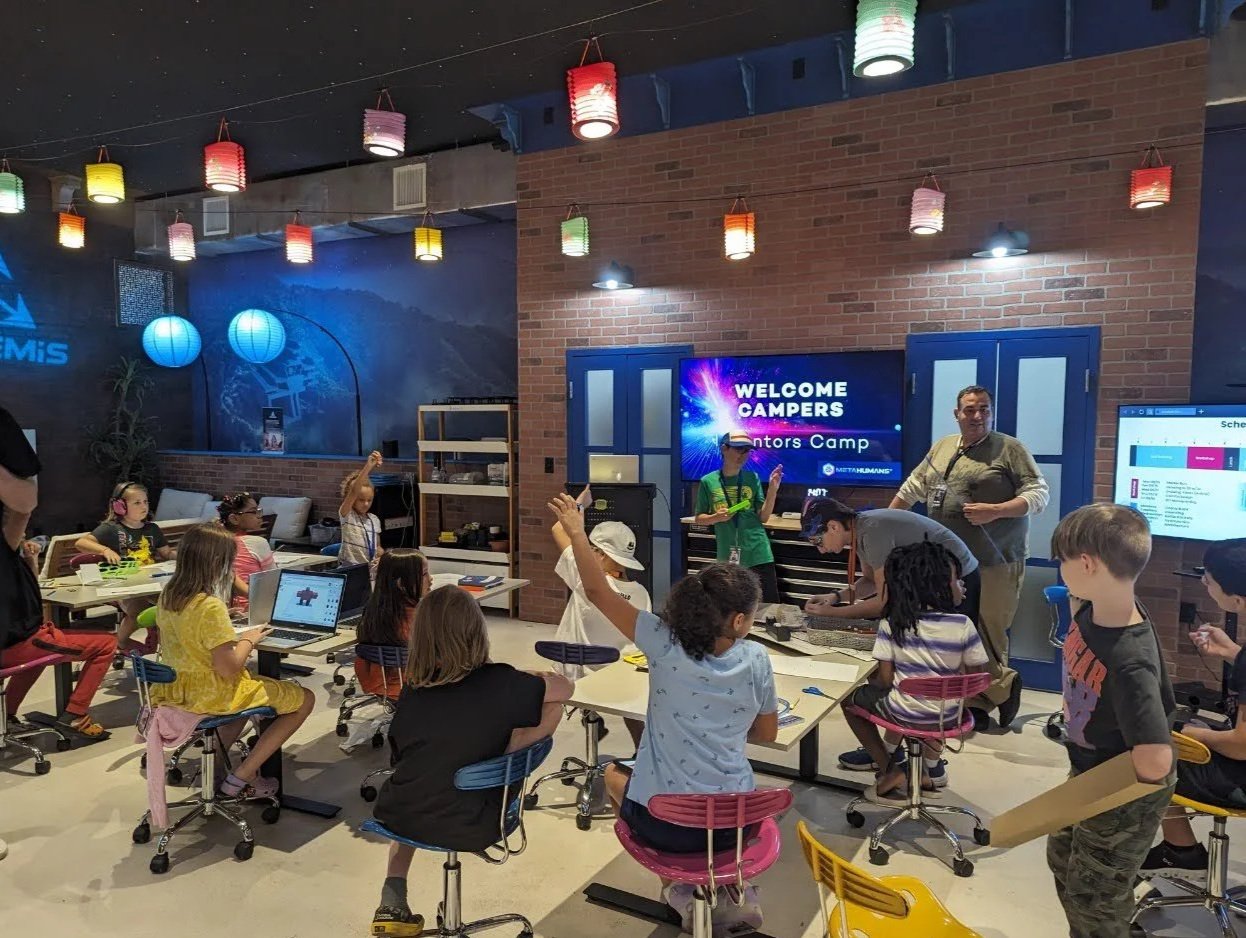
There’s no single “typical” day. Learners move through a mix of guided experiences, focused work, collaboration, play, and conversation. Educators actively support how time is used based on the learner, the group, and what’s unfolding in the space.
What stays consistent is adult presence, social guidance, and intention, not a fixed schedule.
Is this a school or a replacement for school?
Meta Humans is not a school and doesn’t replace school by default.
Some families use Meta Humans as part of a homeschool or alternative education plan. Others use it alongside school. We don’t provide grades, transcripts, or standardized curricula.
How do you support social dynamics and friendships?
Social relationships are actively supported.
Educators help learners navigate communication, collaboration, conflict, and repair. We don’t leave social dynamics unmanaged or assume kids will “figure it out on their own.”
This is one of the core differences between Meta Humans and unstructured spaces.
Is Meta Humans safe?
Yes.
Physical access is controlled, staff are background-checked, and check-in/check-out procedures are in place. Emotional and social safety are treated as just as important as physical safety.
Is there a curriculum?
There is structure, but not a fixed curriculum.
Educators introduce experiences, challenges, and projects, then adapt them in real time based on engagement, interests, and social dynamics. Learning emerges through relationships and attention, not pre-packaged lessons
How do you handle motivation if kids don’t want to participate?
We don’t force participation.
Instead, educators focus on safety, trust, and understanding what’s underneath disengagement. Over time, most learners begin to engage more naturally once they feel known and supported.
This approach takes patience, and that’s intentional.
What ages do you serve?
Most locations serve learners starting around age 7 and up.
Reading, basic writing, and a level of emotional readiness are important for participating safely in a shared learning environment. Specific age ranges and expectations vary by place.
How do you track progress without grades?
Progress is made visible through reflection, recognition, and shared language, not grades.
Some learners use light gamification or progress tracking. Others don’t. The goal is self-awareness and ownership, not comparison.
How long does it take to see the benefits?
This isn’t a one-day or one-week experience.
Most meaningful changes emerge after several weeks, once trust and familiarity are established. Meta Humans works best for families who can commit long enough for relationships to form.
Is Meta Humans a good fit for neurodivergent or gifted learners?
Often, yes.
Many of our members are neurodivergent, gifted, asynchronous, or don’t thrive in standardized systems. Our model is built around flexibility, social guidance, and meeting learners where they are.
That said, no environment works for everyone. Fit matters.
What about teens who lack motivation or seem disengaged?
Many teens arrive feeling unmotivated, burned out, or unsure of themselves.
Rather than pushing productivity, we focus on rebuilding agency, trust, and purpose over time. As teens gain confidence and ownership, they often take on more responsibility, leadership, and meaningful work.
This process can’t be rushed, and forcing it usually backfires.
Can families try Meta Humans before committing?
Visits can give a sense of the space, but they don’t fully represent the experience.
The relational model takes time. Families should expect that a real trial means committing long enough for trust and familiarity to develop.
What happens next if we’re interested?
The next step is to find a Meta Humans place near you and learn about their orientation or onboarding process.
Each place shares the same core model, but local details vary.
What People Are Saying
“My 8 year old son loves this place SO much.
We drive 50 minutes to come here because there is simply nothing else like it.
We homeschool and this is the perfect enrichment program for kids! Your mind will be blown with just one tour. We are so happy to have found this place!”
— Katie D.
“Absolutely fantastic place for the kids. The staff are incredibly friendly, passionate and dedicated, and it's clear that they genuinely care about each and every student. The program is well-designed and the experiences are engaging and interactive, which keeps the children excited and motivated to learn.
My kid loves coming here, I do like that everybody who is working there look like they enjoy the process.”
— Serge T.
“My two children absolutely love going to Meta Humans! They are learning so many new things revolving around science and technology.
Meta Humans offers their students an opportunity to work with amazing people and experience wonderful things they otherwise might not be able to. We are very grateful to be a part of the Meta Humans family.”