
HUBS Model Preview

How Meta Humans scales learning infrastructure without centralizing learning
The HUBS model is Meta Humans’ approach for distributed in-person learning.
HUBS combines local autonomy with shared infrastructure, allowing in-person communities to operate independently while remaining structurally aligned.
See how the Meta Humans HUBS model works, the role of OLM, and why this approach avoids the failure modes of schools, franchises, and centralized platforms.
From learning philosophy
to learning infrastructure
Many learning models rely on exceptional individuals, informal knowledge, or cultural intuition that doesn’t survive growth. Meta Humans approaches the problem differently.
The HUBS model was designed to allow for uniqueness to shine.
Learning remains local and human, the infrastructure that supports it becomes shared.
The result is a structure that supports consistency without normalization.
HUBS do not license curriculum. They license infrastructure: shared language, documentation standards, and trust frameworks that allow learning communities to evolve independently.
The model’s must-haves

Local autonomy
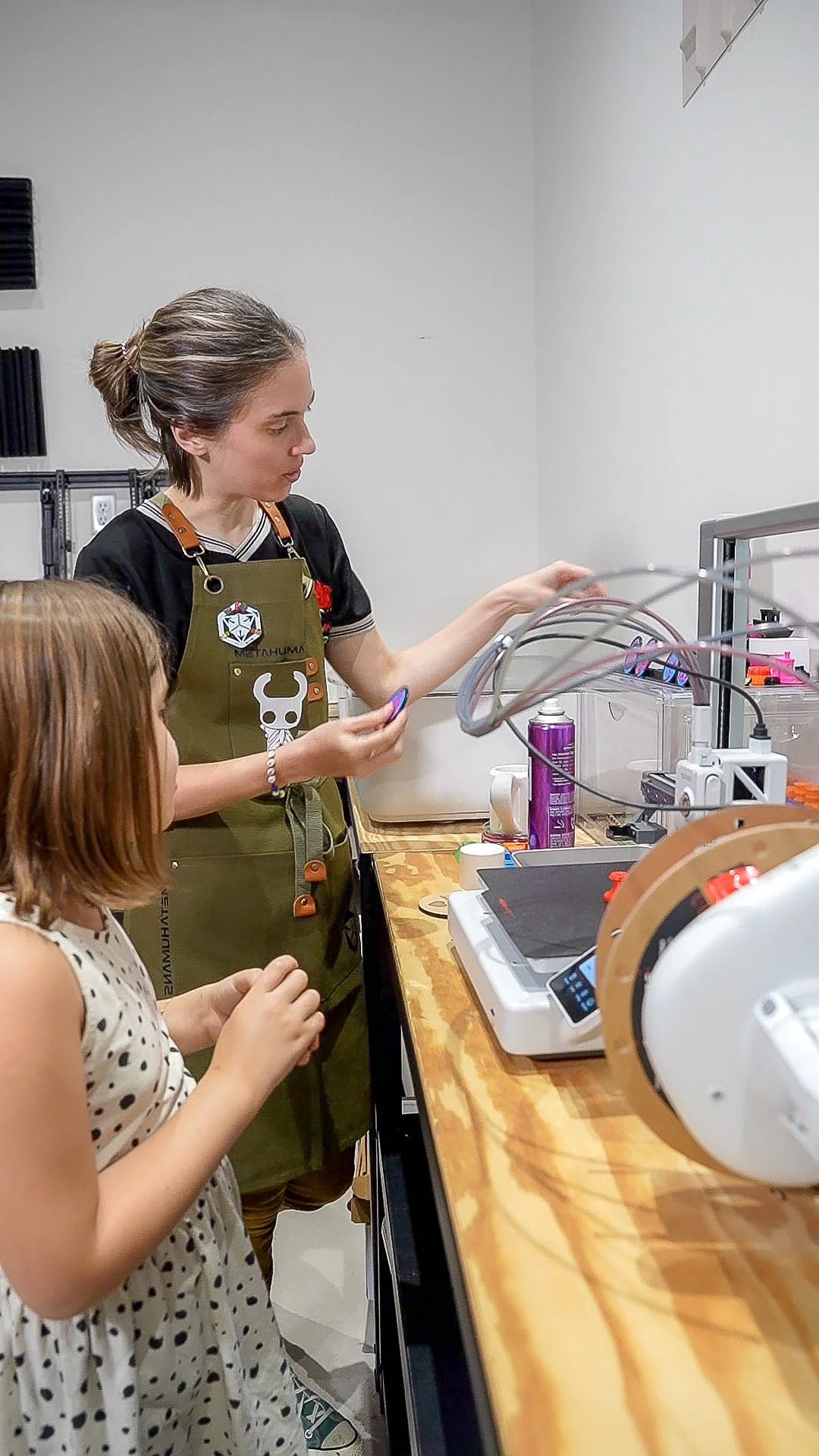
In the HUBS model, learning is delivered by people, not systems.
Each Hub is locally operated and responsible for its own culture, relationships, rhythms, and day-to-day decisions. Educators are not executing scripts or following centralized lesson plans. They are exercising judgment in real time, in response to the learners in front of them.
Autonomy is a requirement. Without it, the model collapses into replication and control.
Shared infrastructure
Autonomy alone does not scale.
The HUBS model provides shared infrastructure so that operators are not starting from zero: it includes common standards for how learning experiences are structured, documented, and referenced across locations.
Shared HUBS systems reduce cognitive load and prevent isolation, while leaving room for local adaptation.
HUBS uses learning frameworks
The Open Learning Map (OLM) is not a curriculum or teaching method. It is a shared structural language for documenting learning experiences so independent hubs can remain autonomous while still being understandable and trustworthy at scale.
OLM is not curriculum, is not assessment, and it does not tell educators how to teach or learners what to learn.
Instead, it provides a shared structural language for describing learning experiences in a way that is reusable, auditable, and comparable across contexts.
Structure without prescription
OLM organizes learning through elements such as programs, routines, artifacts, evidence, and constraints. These elements describe what happened, under what conditions, and with what observable traces.
Crucially, evidence in OLM does not claim mastery. It records that an experience occurred. This distinction allows distributed communities to maintain truth and integrity without inflating claims or enforcing uniform outcomes.
Evidence without standardization
OLM is a shared learning structure that defines:
how learning experiences are composed (routines, artifacts, evidence)
how programs can be reused and adapted
how learning can be documented without standardizing delivery
It does not define curriculum, pacing, teaching style, or outcomes.
Human development without metrics
Meta Humans tracks Human Development Dimensions such as curiosity, agency, belonging, and sensemaking. These dimensions are explicitly non-measurable and non-assessed to allow human development to remain contextual and relational.
HUBS use documented learning experiences while retaining full autonomy over delivery.
What OLM actually provides
Evidence in HUBS is not used to rank learners, compare hubs, or enforce outcomes.
It exists to document that learning activity occurred, support reflection and iteration, and create trust across a distributed network.
Evidence enables scale without control.
HUBS Control
daily rhythms
rituals
staffing
community norms
local programs
Shared infrastructure provides
OLM structure
program library
documentation standards
tooling
governance & evolution
HUBS model evolves with you
Training pathways, documentation, tooling, and certification processes are being developed alongside early HUBS partnerships. We are building a community-driven, distributed learning infrastructure and we want you to be part of the journey.