

How Meta Humans Works

What a day looks like, how projects run, and what to expect in the first three months. Read this page and you'll know whether we're a fit before you ever visit.
The problem we're built for
Plenty of kids are fine in a standard classroom. Ours mostly weren't. Some were bored and coasting. Some were anxious and shrinking. Some are homeschooled by choice and need what home can't easily supply: peers, structure, equipment, and adults outside the family who take their work seriously. And some go to school all day and need afternoons with more in them than homework and a screen.
Meta Humans gives those kids a place where the day has a dependable shape, the work is real, and the people stay the same. Confidence, friendships, and motivation grow out of that combination. We don't promise outcomes, and we won't pretend a first visit shows you much. What we can show you is the structure, because the structure does the work.
A day, start to finish

Arrival 9:00 - 9:30
Members check in, put their things away, and land in the room before the first session starts. Arriving on time matters here, because everything after runs as a group.

Skill Building & Goals
Every day starts with personal goals, on screen at check-in, so your child picks up where they left off. Homeschoolers can bring their own schoolwork, and our staff help with it at no extra cost.

Morning Meeting & General Knowledge 10:30
A warm-up, a team check-in, then a 20-minute thinking ritual around one word and one big idea, drawn from a collection spanning history, science, philosophy, art, language, and geography. It often starts with writing: the word and definition are dictated before the card is revealed.

Workshop 11:00
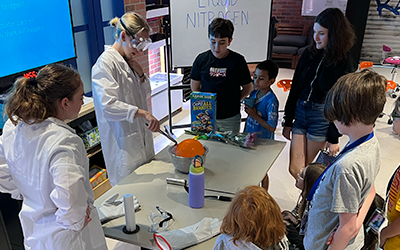
A focused 60-minute session: hands-on builds most days, educator-run demos on others. The format stays familiar; the topic rotates with the term. During Robotics that might be breadboard basics or sensors; during Ancient Technology it might be sundials or mini catapults. Once a week, this slot is self-paced coding.
Lunch 12:00
Lunch and screen-free play until 12:45, then a group game together. At 1:00, a short meeting revisits the word of the day. For many kids, this is where the friendships form.

Team Project 1:00
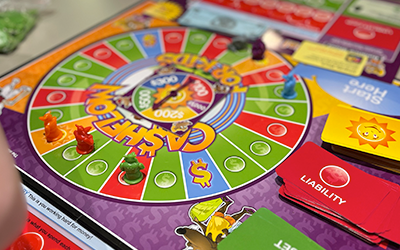
The centerpiece of the week. Each weekday has its own project, running all term, with the same crew. Members work toward a real finish: a tournament, a market, a showcase, an expo. Educators guide, members do.
Clubs & Open Studio 3:00
Chess Club, Language Club, theme crafts, self-directed projects, games. The standard day ends at 4:00.
Pick-Up 4:00
Small-group tutoring in math and reading, schoolwork, and tracked goal work for motivated members. Select days at participating centers; details on the pricing page and each location's page.
Open Monday to Friday, 9:00 to 4:00, with an academics block to 6:00 on select days at some centers.
We strongly recommend arriving at 9:00.
After-schoolers: most after-school members arrive around 2:30 and stay to the end: clubs and open studio, then the academics block for homework, tutoring, or a skill they're chasing.
How projects work: the META arc
Every team project follows the same four-phase arc:
Mission: meet a real challenge, define what to solve. Projects open with a concrete first build, not a week of introduction.
Exploration: research, plan, and build, with guidance.
Troubleshoot: test, gather feedback, improve. Builds fail here on purpose; version three learns from version one.
Application: present to a real audience or complete a prototype. Terms end in showcases, markets, and expos.
Attend once a week on the same day and still finish something; weekly attendance adds depth and escalation. Because members attend on set weekdays, we sometimes run the same project skeleton on two different days of the week. That's deliberate: a Monday team and a Thursday team are different kids, and each takes the project somewhere different.
The six experiences
Every day combines six kinds of experiences. Each develops something different; the topic is never the point, it's the context.
Workshops
Short, focused sessions led by an educator. Always ends with something made, tested, or understood. No prior experience ever required.
Culture Générale
A daily thinking ritual: one word, one idea, and two open questions with no right answer.
Team Projects
One project per weekday, running all term. Planning, teamwork, follow-through, and presenting in public.
Clubs & Open Studio
Interest-based groups and self-directed making. Friendships form around shared interests.
Skill Building & Goals
Self-paced practice, personalized. Goals set with an educator, progress logged every visit.
Tutoring & Academics
Small-group help in math and reading, placed by assessment and tracked session by session.
One room, ages 7 to 16
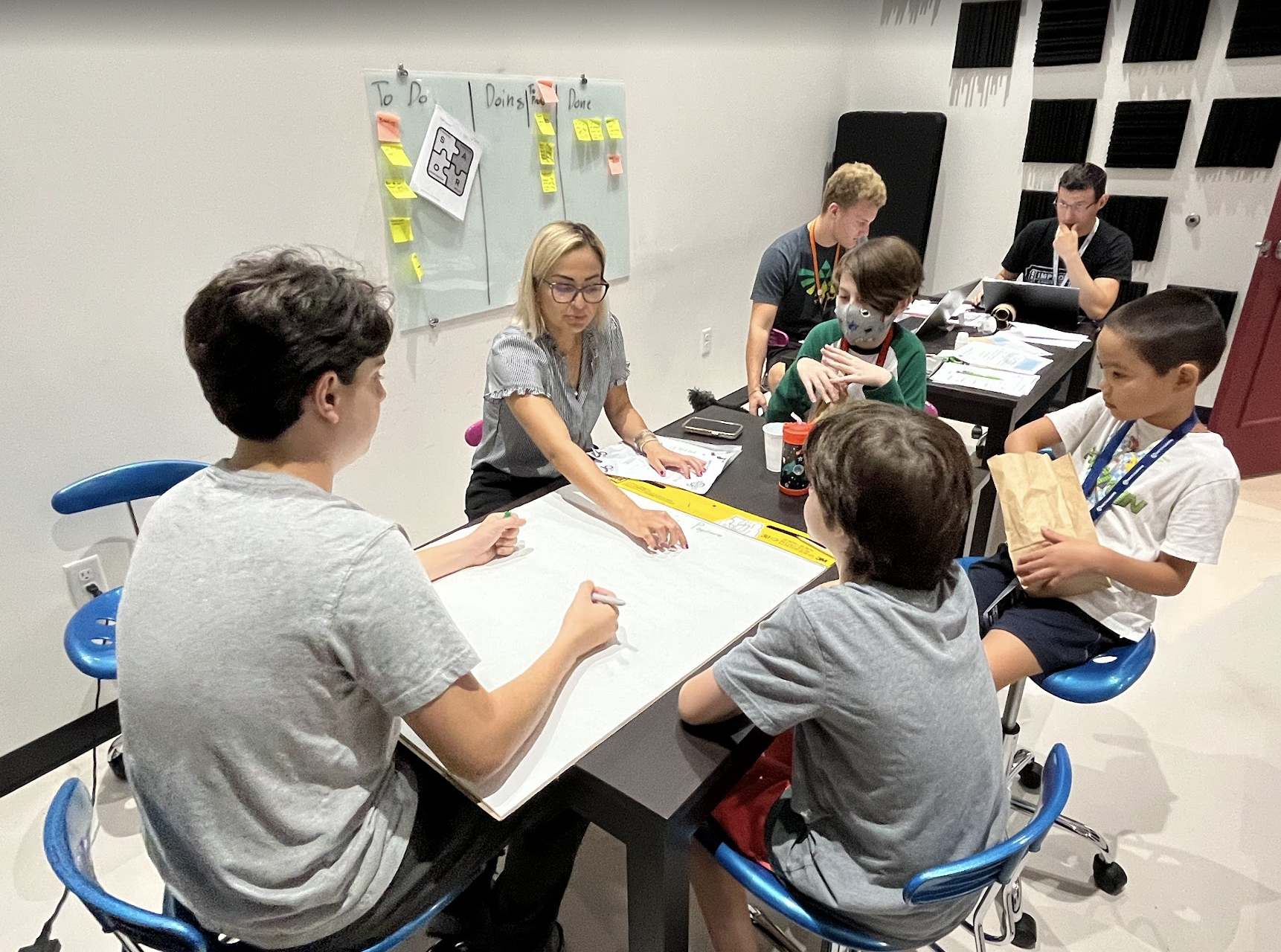
Meta Humans runs on mixed ages, on purpose. A 9-year-old and a 15-year-old on the same team are both getting something the other makes possible. Younger members get older kids to watch, imitate, and ask. Older members get the deepest kind of practice there is, because explaining your build to a 9-year-old, or leading a team through a disagreement, is training no same-age classroom offers. Projects offer different tracks by challenge level, not by birth year.
This takes skill to run well. It's also, in our experience, where much of the social growth parents notice actually comes from.
Progress you can see
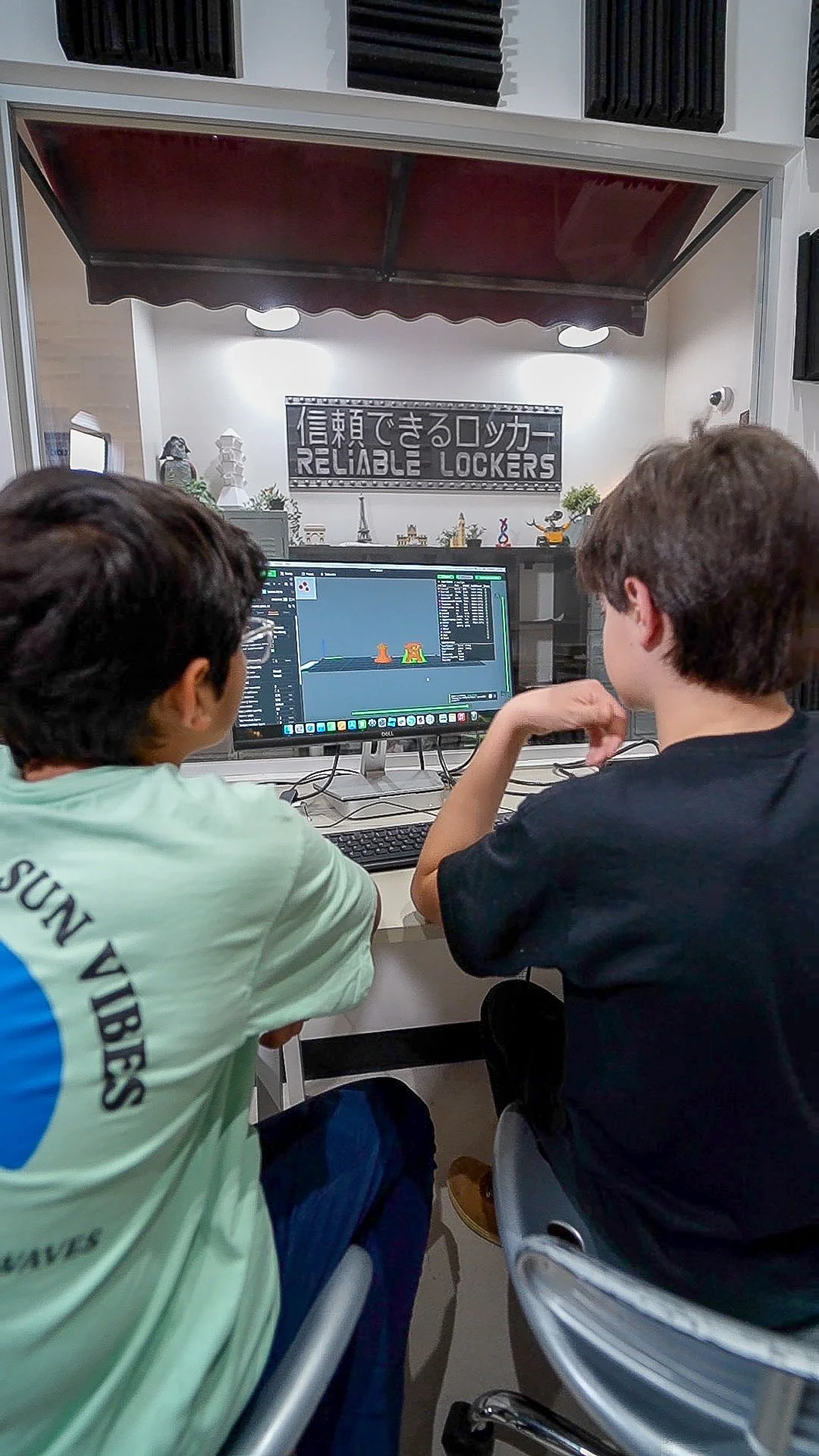
No grades: learning shows as evidence, the things members make, test, present, and complete. At checkout, your child prints a daily receipt and brings it home: what they did, the word they discussed, and notes from the educators.
The member portal keeps goals and evidence in one place, ready for homeschool portfolios. Term emails tell you what's coming, and monthly review conversations are yours for the asking.
What to expect, honestly
This is a drop-off program with a rhythm. Parents drop off; kids stay and work. What we ask in return is consistency: at least one day a week, ideally two, most weeks. That's the minimum for your child to really be part of a team. Occasional visits spread months apart don't work, for the kids or for the room.
The value emerges over weeks and months. A trial is a regular paid visit and shows you the environment and the structure. It can't show what changes after a child has been part of a team for a term. Some kids click in a week; some take a term. Both are normal.
Things will go wrong here, on purpose. Builds collapse, teams disagree, weeks fall flat. Our educators coach members through the friction instead of erasing it, because handling failure and tension is a big part of growing up, and there are very few safe places left to practice it.
We need a parent in the loop. Every family identifies the adult who reads our updates and stays in the loop, and we keep that channel active.
And sometimes it's not the fit. Most memberships end with a kid who has grown. Once in a while a child needs a different environment, and when that happens we'll say so honestly. We would rather have an honest conversation than a miserable membership.
“The future doesn’t belong to kids who memorize the most, it belongs to kids who know how to learn, adapt, and connect.”